Carrier vs Broker — Who Owns the Truck?
One question decides your entire car shipping experience, and almost nobody asks it. This page explains the two business models behind every transport quote you'll ever get, how to tell which one you're talking to, and the exact questions to ask before you book — anyone, including us.
Written by a company-owned and operated carrier that's been answering this question honestly since 1993.
- Every truck SAC runs is SAC-owned
- Every driver is a direct SAC employee
- Ask us anything — real people answer
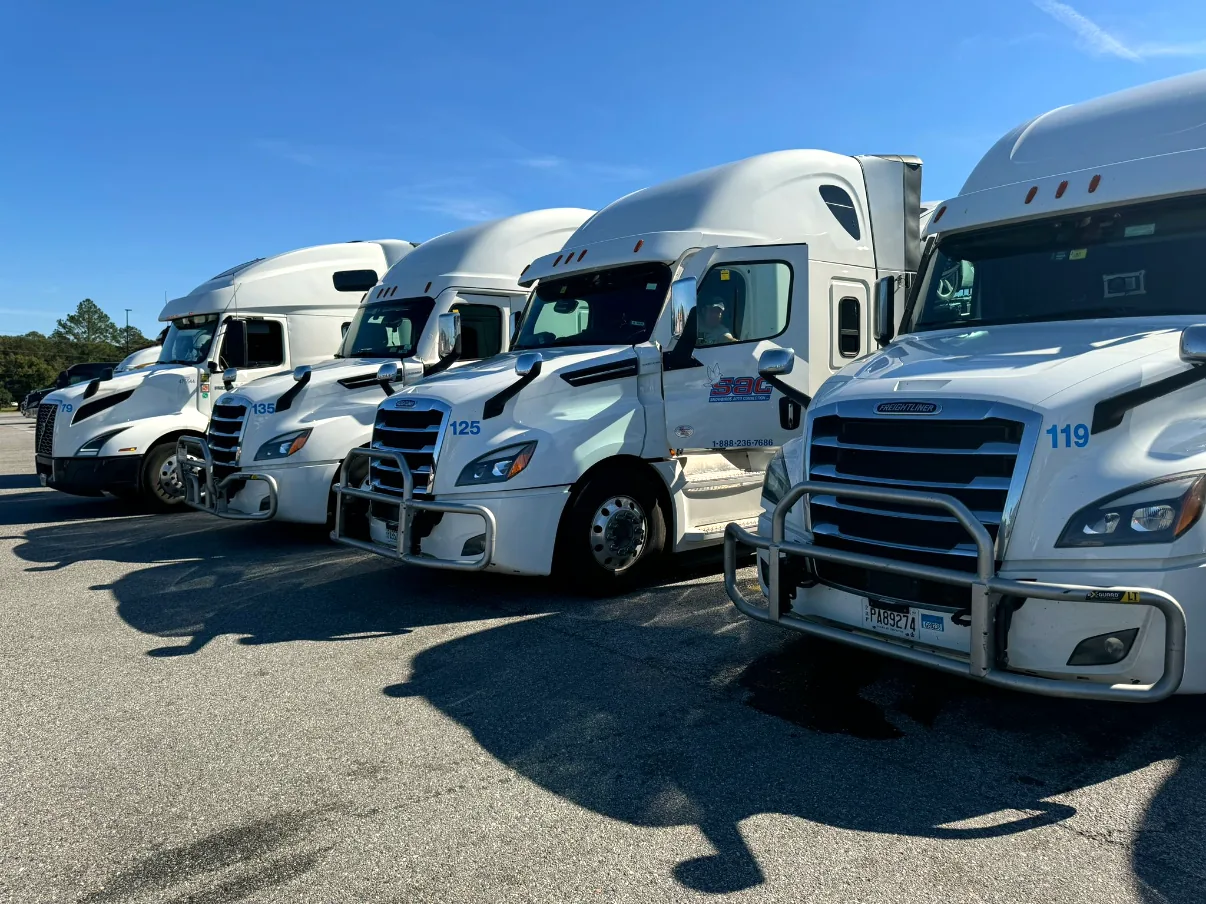
A carrier owns trucks and employs drivers — it moves your vehicle itself. A broker owns no trucks: it sells the job, posts your vehicle on a load board, and hands it to whichever third-party carrier accepts it. Most vehicle transport companies in Canada are brokers, and most customers never know. The difference decides who is accountable for your vehicle, whether the quoted price holds, and who actually answers when you call. Snowbirds Auto Connection is a company-owned and operated carrier — we own every truck and employ every driver, since 1993. To find out who you're talking to, ask one question: who owns the truck? Call 416-638-0001 and ask us — we love that question.
Updated September 2026
What Actually Happens After You Book
Both companies quote you. Both take your booking. What happens next is where the two models split — and where your experience is decided.
You book with the company that does the work
A carrier owns its equipment and employs its drivers. When you book, you've hired the people who will actually touch your vehicle.
- The truck that arrives belongs to the company you called
- The driver is an employee, vetted and trained to one standard
- The quote comes from the people doing the work — it reflects reality
- One company is accountable from your driveway to delivery
- When you call for an update, they're checking their own truck
You book with a sales office
A broker owns no trucks and employs no drivers. When you book, you've hired someone to find someone — usually on a public load board, usually the lowest bidder.
- The truck that arrives belongs to a company you've never heard of
- The driver works for the winning bidder, not for whoever quoted you
- The quote is a teaser — the real carrier may demand more to move
- Accountability sits between two companies — and can vanish there
- When you call for an update, they're calling someone else
How Do I Know If a Car Shipping Company Is a Broker or the Carrier?
Brokers aren't illegal, and brokering isn't a scam — it's a legitimate, regulated business model that moves a lot of vehicles. But you deserve to know exactly what you're buying.
The load board
When a broker takes your booking, your vehicle becomes a listing — posted to an industry load board where third-party carriers bid to take the job. The broker keeps the spread between what you paid and what the winning carrier accepts. That's the whole business: the margin between your price and the truck's price.
Why the first quote is so low
A broker wins your booking by quoting low — they don't need the number to be enough to move your car, only enough to get your deposit. If no carrier accepts the job at that price, the price moves. That's why so many transport stories start with one number and end with another.
The accountability gap
When something goes wrong — a scratch at delivery, a missed window, a vehicle that seems to be nowhere — the broker points to the carrier and the carrier points to the broker. You signed with one company and your car rode with another, and the gap between them is exactly where your problem lives.
How to spot the model
Look for the tells: a quote that arrives in minutes without a single question about your vehicle, websites with no photos of their own equipment, and careful phrases like "our nationwide network of carriers" with no name attached. A network nobody will name is a load board wearing a suit.
The test that never fails: ask "will my vehicle travel on a truck your company owns, driven by your employee?" A carrier says yes in one word. A broker gives you a paragraph.
Four Moments Where the Difference Gets Real
The model you chose is invisible right up until one of these moments — then it's the only thing that matters.
The price, after you've committed
With a broker, the number that won your booking and the number a real truck will accept can be two different numbers — and you find out after your dates are locked and your plans depend on it.
With a carrierThe company quoting you is the company hauling it. The quote reflects the actual cost of the actual truck — which is why it's firm, in writing, before you book.
The day something gets scratched
Damage claims between two companies are where customers get worn down — the booking company didn't touch your car, and the company that touched it never met you.
With a carrierOne company inspected it, loaded it, hauled it, and delivered it — and documented its condition at both ends. There is exactly one place responsibility can sit, and it's the company you can call.
The week you can't find your car
A broker tracking your vehicle is calling the same stranger you would — they just have the phone number. If the third-party carrier goes quiet, everyone is in the dark together.
With a carrierThe dispatcher and the driver work for the same company — your update comes from the people running the truck, before you ask. Proactive email updates at every key milestone.
The standard your vehicle rides on
On a load board, you don't choose the carrier — the price does. Equipment condition, driver vetting, and insurance practices vary with whoever bid lowest that morning.
With a carrierOne fleet, one hiring standard, one insurance policy, one way of strapping down a vehicle — the standard doesn't change because the company doesn't change.
Five Questions to Ask Before You Book Anyone — Including Us
Ask these on the first phone call. A real carrier answers all five without flinching — and you'll hear the difference immediately.
"Do you own the trucks that will carry my vehicle?"
The whole page in one question. Listen for a straight answer — not "we have a fleet of partner carriers," not "we work with a trusted network."SAC's answerYes, in almost every case. The long haul runs on SAC-owned trucks with SAC drivers. When a last-mile flatbed or one of our long-standing partners carries part of a move, we tell you when you book.
"Are your drivers your employees?"
Employees are vetted, trained, and accountable to the company you're paying. Subcontracted drivers answer to whoever won the bid.SAC's answerYes. Every driver on an SAC truck is a direct SAC employee, vetted before hire and trained to our standard.
"Will my vehicle ever be posted to a load board?"
This is the question brokers hope you don't know to ask. If the answer is a load board, a marketplace, or "whoever is available," you have your answer. A partner they can name and have used for years is a different thing — ask who it is.SAC's answerNever. Your vehicle rides on our carrier for the long haul; where a smaller truck or a partner we have used for years takes a last leg, we arrange it and tell you — no load board, ever.
"Is the price you quoted the price I'll pay?"
Ask whether the quote is firm and what could ever change it — and get it in writing. Vague answers here predict surprises later.SAC's answerYes — firm and in writing before you book. The fuel surcharge, 20% of the rate as of September 2026 and the same for every customer, is shown on its own line. It is subject to change with the price of diesel; if it changes after booking, we contact you in advance and you can cancel at no charge.
"Who do I call if something goes wrong — and who answers?"
The honest version of "do you have customer service." You want one company holding the whole chain: inspection, transport, delivery, and resolution.SAC's answerYou call 416-638-0001 and reach a real person at the company that inspected, loaded, hauled, and delivered your vehicle. One company. Complete accountability.
We Built This Page Because We Built the Other Kind of Company
A family-owned carrier that owns its trucks and employs its drivers — no brokers, full accountability on every move.
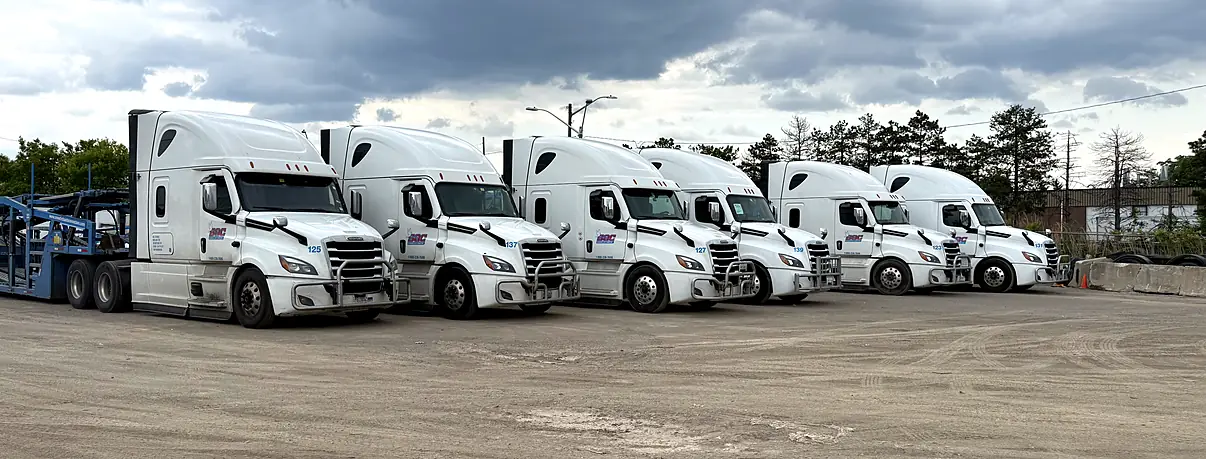
SAC owns every truck in our fleet and employs every driver directly. We do not post your vehicle on a load board or hand it to a carrier we don't know. When you book with SAC, our own trucks and drivers carry your vehicle, and our office answers for it from booking to delivery. One company. Complete accountability.
We've never operated any other way.
Since 1993, SAC has run its own equipment with its own drivers — through the years when brokering would have been easier and cheaper, and through every season since. Where a last leg needs a smaller truck or a long-standing partner, we arrange it ourselves and tell you before you book.
We're honest about the edges.
The linehaul is almost always our truck and our driver. Where geography adds a step — a ferry crossing to Vancouver Island or Newfoundland, a smaller truck for an island leg, a partner terminal securely holding a vehicle until our carrier arrives — SAC coordinates it end to end and tells you exactly how your move is staged when you book. Coordinated honestly is still our job, done our way.
Licensed and certified on both sides of the border.
SAC holds a valid CVOR in Ontario, is FMCSA registered in the US, and arranges licensed and bonded customs clearance on both ends for cross-border moves. USDOT 861379 · MC-379482 · CVOR 134-578-571 — verify us on the FMCSA register.
We document everything.
Full Inspection Report and Photo Survey at pickup. Final inspection at delivery. A documented record at both ends of the journey.
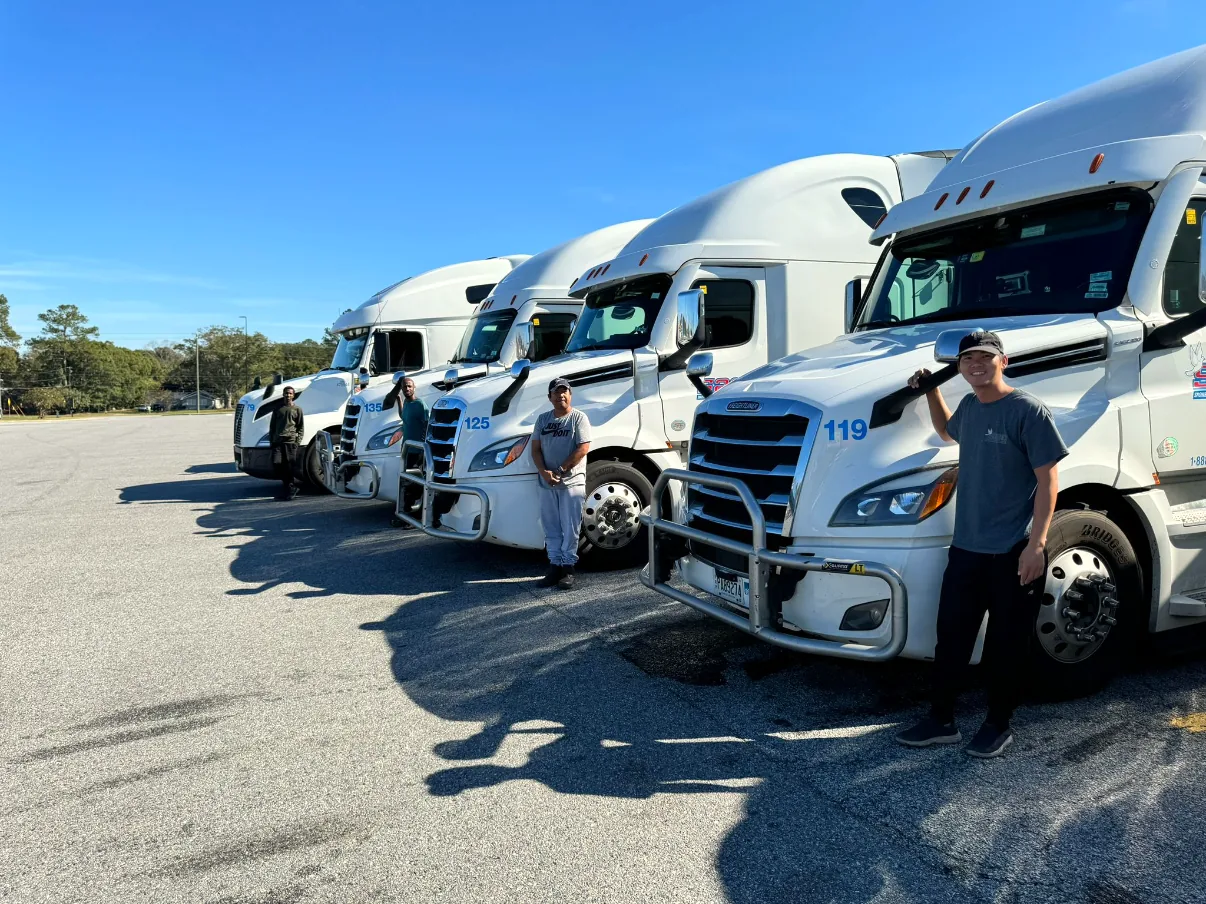
Ron Ohayon founded Snowbirds Auto Connection in 1993 after he couldn't find a reliable way to ship his own mother's car from Toronto to Florida. What he kept running into was the gap this page describes — companies that sold the move but didn't make it. So he bought a truck. The company is still family-run, and the answer to "who owns the truck?" hasn't changed in over thirty years.
— Since 1993. Family-owned. Company-owned and operated.A safety record you can check yourself.
In Our Customers’ Own Words
Real Google reviews, as posted, from people who shipped with us — lightly trimmed for length.
“We had an excellent experience with Snowbirds Auto Connection when shipping our car from Toronto to Florida! The car arrived at our door in Florida, damage-free and on schedule… respectful, professional, responsive, and kept us informed. We have already booked our return to Toronto with them!”
“Not a chance there is a better service to move vehicles. These people are professionals, honest and 1000% trustworthy. Can’t recommend them enough.”
“Got my car to me way quicker than I expected, car arrived as if it was sealed in a box from factory, zero scratch, always on touch for updates, above and beyond, super professional.”
Every review here is published on our Google Business Profile, in the customer’s own words.
Carrier vs. Broker — Your Questions, Answered
Ask Us the Question
Call and ask who owns the truck. Ask if your vehicle will ever see a load board. Ask who answers when something goes wrong. We built this company so the answers would be easy — and we've been giving the same ones since 1993.
Monday to Friday, 9 AM–5 PM EST · info@snowbirdsautoconnection.com · Response within one business day